
I’m finally taking the increased risk of stroke in Fabry disease seriously
My mother's scary incident sounded an alarm I needed to hear
Written by |





I live six hours away from Cajun country, where my family line is rooted. I miss the lush greens of southern Louisiana, the comfort food, and most of all, the people I love so dearly.
On July 3, my daughter and I were driving there when I saw a message from my brother pop up on my phone with five words: “Mom can’t say my name.” The family chat exploded as he rushed her to the hospital, and the rest of us mobilized into action.
My mom lives alone, so her story could have easily ended differently, but miraculously, my brother was saying goodbye after a visit when she suffered a stroke. He sprang into action, and she was given clot-busting medication within the window of time when it is most effective. This was a huge blessing, along with the fact that my mother’s crisis happened on a day when all six of my siblings and I could be with her, which is quite rare!
When I arrived on the scene, my mom was nonverbal, her face had begun to droop, and she was unaware of her surroundings. My heart broke at the thought of what her life might look like from this point on. However, within 24 hours of the stroke, we were encouraged by her dramatic turnaround. The droopiness was gone, and she was speaking, swallowing, and able to stand.
She was still struggling with aphasia on day two and would get stuck on nonsense words or use incorrect words in her attempts to communicate. But by day three, we were assured that a tragedy had been averted and she should make a full recovery.

Making a commitment
Before this incident, I didn’t know the difference between a stroke (a sustained blockage of blood flow to the brain that causes permanent damage) and a transient ischemic attack, or TIA (a temporary blockage that does not cause permanent brain damage). I didn’t know the signs to look for, either. After facing the prospect of permanent paralysis or death for my mom, however, I hope to raise awareness.
It can be hard to distinguish between a TIA and a stroke at first, as the warning signs are the same. The acronym “BE FAST” can be used to help remember the symptoms: Balance, Eyes, Face drooping, Arm weakness, Speech difficulty, Time to call 911.
Because my Fabry mutation came from my dad’s X chromosome and not my mother’s, I know that my mom’s stroke was caused by other factors. Yet, my week in the hospital with my mom reminded me that Fabry disease is linked to an increased risk of stroke. So I dusted off a folder in my file cabinet with “FABRY” boldly printed in purple marker. This folder is stocked with patient information leaflets that my family received more than six years ago after several of us were diagnosed with the condition.
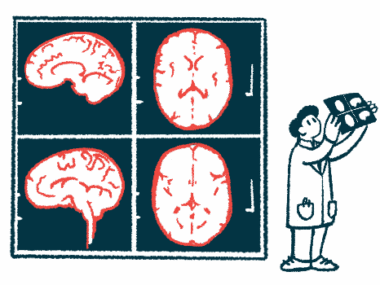
Among the contents, one booklet we received from our patient education liaison at Sanofi provides a jarring statistic: In the U.S., women with Fabry disease are four times more likely to suffer a stroke or TIA than other women their age. Practically every leaflet in my folder includes a diagram of cerebrovascular and central nervous system symptoms, accompanied by an illustration of a brain.
In addition, I’ve seen multiple Fabry Disease News articles with scary truths about the increased risk of stroke for Fabry patients. As a December 2025 article explained, “deficiency of the alpha-galactosidase A (alpha-Gal A) enzyme … results in the accumulation of fatty molecules, primarily globotriaosylceramide (Gb3), within cells. … Gb3 deposits can accumulate in blood vessel walls, narrowing them and restricting blood flow to the brain, which can lead to a stroke.”
It took my mother’s close call to sound an alarm I needed to hear. About 99% of the time, I think of myself as a caregiver to children with Fabry, and not the patient. Yet, when several of my kids and I tested positive for the genetic mutation that causes Fabry disease in 2019, I was prescribed the same battery of tests as they were. I underwent an MRI, a cardiac ultrasound, kidney tests, and an electrocardiogram. Then, I stuffed my “Monitoring Your Health” guide back into my file cabinet and haven’t done a single follow-up visit or test since.
Here is my confession: I won’t hide behind ignorance. From now on, I will keep my eyes open for signs of concern, and I’ll make a doctor’s appointment for myself to monitor how my disease is progressing. I’m committing to this right now in black and white. If you haven’t been consistent with your medical tracking and checkups, let’s work together to prioritize our health.
Note: Fabry Disease News is strictly a news and information website about the disease. It does not provide medical advice, diagnosis, or treatment. This content is not intended to be a substitute for professional medical advice, diagnosis, or treatment. Always seek the advice of your physician or other qualified health provider with any questions you may have regarding a medical condition. Never disregard professional medical advice or delay in seeking it because of something you have read on this website. The opinions expressed in this column are not those of Fabry Disease News or its parent company, Bionews, and are intended to spark discussion about issues pertaining to Fabry disease.


Leave a comment
Fill in the required fields to post. Your email address will not be published.