
Guest Voice: Believe us when we say we’re having a bad day
One of the hardest things about invisible illness is when people judge us
Written by |





Having Fabry disease means living in an unpredictable body and in a world full of people who often refuse to believe what they can’t see.
I have good days when movement feels almost normal, pain sits quietly in the background, and energy allows for work, laughter, and making plans. And then I have bad ones when the burning, tingling, numbness, and intense pain take over without warning. In addition to enduring the physical suffering, the hardest part for me is navigating doubt and judgment by others when my symptoms fluctuate.

Fabry disease doesn’t announce itself with scars or other visible markers. It works internally and relentlessly, damaging nerves, blood vessels, and organs. The pain can feel like fire under my skin, electricity shooting through my hands and feet, or pins driven deep into my muscles and bones.
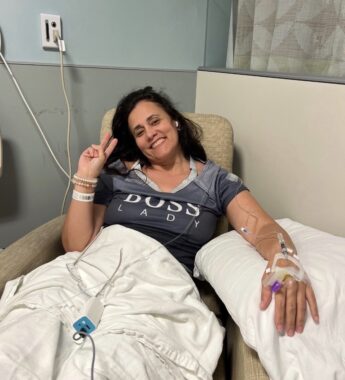
Narah Cano receives infusions in the hospital before having a port placed in her chest in September 2025. The port now allows her to receive infusions at home. (Courtesy of Narah Cano)
On bad days, even a light touch can hurt. Walking feels impossible, and fatigue becomes crushing. It’s not the kind of fatigue that sleep fixes, but rather the type that weighs down my body and clouds my mind.
And yet, on good days, someone with Fabry disease may appear capable, functional, and even strong, despite having a bad day just before.
This contrast creates a dangerous illusion for others: If we were fine yesterday, how can we be struggling today? If we can smile, work, and move one day, why are we in bed the next? This fluctuation becomes evidence that is used against us. Our pain is questioned, our symptoms minimized. People question our motives and judge us instead of listening.
Being doubted cuts deep. It forces us to constantly justify our own experiences, describe pain that has no simple explanation, and defend rest as a necessity rather than laziness.
We’re pressured to practice wellness, to push through the pain so that others can feel comfortable, and to hide our suffering so we’re not labeled dramatic, unreliable, or weak. Over time, this doubt can be just as damaging as the disease itself. It erodes trust, self-confidence, and a sense of safety in one’s own truth.
The unpredictability of Fabry disease also robs people of control. Plans are made with caution and canceled with guilt. Commitments feel risky. A good morning can collapse into a painful afternoon without warning.
This constant uncertainty creates anxiety and grief over a body that can’t be trusted, consistency that others take for granted, and a version of life that depends on reliability. Yet, because our symptoms are invisible, this grief is also often disregarded.
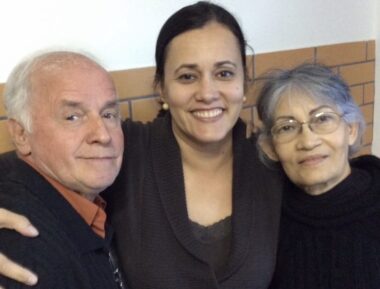
Narah Cano’s mother, Afra de Oliveira, right, is one of her biggest supporters on her journey with Fabry disease, a condition she inherited from her father, João Cano Filho, left. (Courtesy of Narah Cano)
What many fail to understand is that fluctuation does not mean exaggeration. It means the disease is dynamic. Nerve pain doesn’t follow a schedule. Energy doesn’t obey calendars. A good day isn’t proof of health; rather, it is a temporary alignment of circumstances. A bad day isn’t failure; it is reality asserting itself.
Living with Fabry disease requires resilience that is rarely acknowledged. It requires learning when to push and when to stop, how to advocate without apologizing, and how to honor pain without letting it define identity. It also requires confronting judgment with quiet strength, knowing that disbelief does not invalidate lived experience.
Ultimately, our demand is simple but often unmet: Believe people when they tell you they are in pain. Understand that illness does not need to be visible to be real. And accept that living with a fluctuating disease means surviving both the symptoms and the constant need to explain them.
To submit your own Guest Voice for publication on Fabry Disease News, please email your idea to our columns manager at [email protected] with the following included in the subject line: “Guest Voice: Fabry Disease News.”
Note: Fabry Disease News is strictly a news and information website about the disease. It does not provide medical advice, diagnosis, or treatment. This content is not intended to be a substitute for professional medical advice, diagnosis, or treatment. Always seek the advice of your physician or other qualified health provider with any questions you may have regarding a medical condition. Never disregard professional medical advice or delay in seeking it because of something you have read on this website. The opinions expressed in this column are not those of Fabry Disease News or its parent company, Bionews, and are intended to spark discussion about issues pertaining to Fabry disease.