
Brain health remains stable for Fabry patients on Galafold: Study
Damage more likely in those with high blood pressure; treatment could help
Written by |
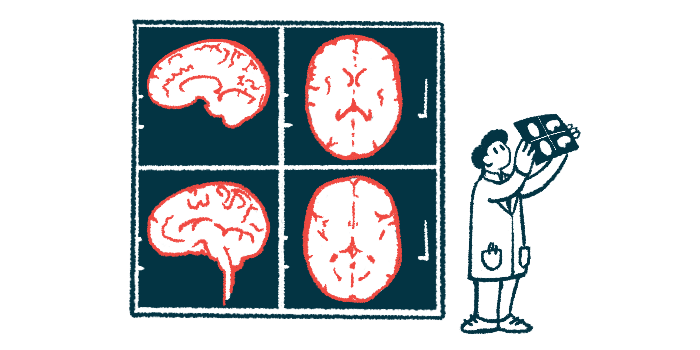




Markers of disease-related tissue damage in the brains of Fabry disease patients treated with Galafold (migalastat) tend to remain stable over time, a study found.
Fabry patients with high blood pressure may be more likely to have damage in the brain, according to the study, suggesting that treatments to control blood pressure may help prevent disease-related brain damage.
The study, “Impact of migalastat on cerebral outcomes in fabry disease – results from the prospective observational FAMOUS trial,” was published in Neurological Research and Practice. The work was funded by Amicus Therapeutics, the company that sells Galafold.
Fabry disease is characterized by defects in an enzyme needed to break down certain fatty molecules, leading to their buildup to toxic levels in certain organs and tissues. Galafold is an oral therapy that can increase the defective enzyme’s functionality in certain patients.
The toxic buildup of fatty molecules in Fabry disease tends to hit blood vessel cells especially hard. One consequence of this can be damage to blood vessels in the brain, which is why rates of stroke are higher among Fabry patients than in the general population.

Study looks at data over 2 years
There is little data on whether and how Galafold treatment affects damage to brain blood vessels in people with Fabry disease. To learn more, scientists conducted the FAMOUS (NCT03135197) study, in which 33 people taking Galafold underwent MRI scans two years apart. Nineteen had confirmed pathogenic (disease-causing) mutations. The other 14 had mutations classified as likely benign (not disease-causing).
In most patients, standard scores for blood vessel damage were in the low or moderate range and remained stable over the two-year study. Four patients with pathogenic mutations developed some new signs of damage to brain blood vessels, but these were all small, subtle changes. None of the patients had cerebral microbleeds (a form of bleeding in the brain).
The researchers noted that patients with hypertension (high blood pressure) tended to show more signs of brain blood vessel damage. This is consistent with data from the general population, which has shown that high blood pressure can increase the risk of problems with blood vessels in the brain. The presence or absence of hypertension was a stronger predictor of brain vessel abnormalities than whether patients had a pathogenic or likely-benign mutation, suggesting that controlling hypertension may be key to mitigating Fabry-related brain damage.
“Antihypertensive treatment may be of high importance to reduce [damage in the brain] in Fabry disease,” the researchers wrote.
One patient in the study showed brain damage indicative of multiple sclerosis (MS) and was ultimately diagnosed with that disease. This patient’s case highlights the importance of distinguishing between different specific patterns of brain damage on MRI scans of Fabry patients to ensure that co-occurring conditions aren’t missed, the researchers said.
The scientists noted that the study was limited to a small number of patients, so further research is needed to validate and expand on the results.