
Early kidney signs may emerge before symptoms in Fabry disease
Small study supports kidney monitoring from childhood onward
Written by |
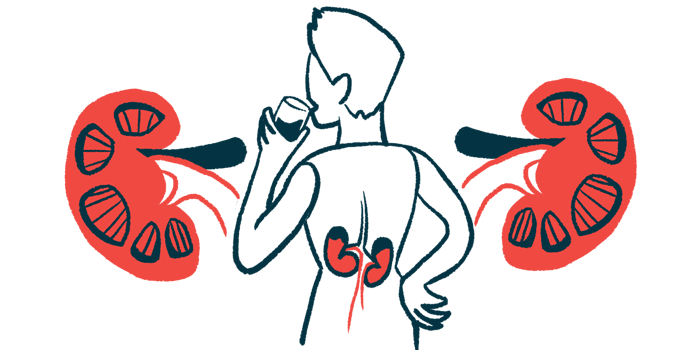




Kidney involvement in Fabry disease can begin early, even before symptoms or marked loss of kidney function develop, a study has found, highlighting the importance of early diagnosis and monitoring.
“These findings support kidney surveillance from childhood onward,” researchers wrote in “Clinical and Laboratory Characteristics of Fabry Disease in Children and Adults: A Focus on Early Kidney Findings,” which was published in the Journal of Clinical Medicine.
In Fabry, disease-causing mutations reduce the activity of alpha-galactosidase A (alpha-Gal A), an enzyme that helps break down certain fatty molecules inside cells. When the enzyme does not work properly, these fatty molecules can build up inside cells and damage organs, including the kidneys. Kidney involvement may begin early and worsen over time, but how it varies with age remains unclear, especially in people who do not yet have symptoms.

Family screening helps uncover Fabry disease before symptoms
To better understand early kidney involvement in Fabry disease, including findings that can appear before marked loss of kidney function, the researchers reviewed medical records of 16 patients — seven children and nine adults — who were followed for up to 10 years. They came from six families, each with one patient who was the first in the family to be diagnosed, known as the index patient.
Family screening helped identify Fabry disease in people without symptoms. Six of the 10 patients diagnosed through family screening had no symptoms before diagnosis. The median age at diagnosis was 24.5 years. Among patients with known symptom onset, the median delay between symptom onset and diagnosis was eight years.
Eight patients (50%) experienced acroparesthesia, or burning, tingling, or pain that usually affects the hands and feet. Other symptoms included digestive problems (31.3%), eye problems (25%), hearing or balance problems (18.8%), and angiokeratomas, small, dark-red skin lesions (18.8%). Two patients (12.5%) had a temporary stroke-like episode or an ischemic stroke.
Proteinuria, or excess protein in the urine, occurred in eight patients (50%). Hematuria, or blood in the urine, occurred in seven (43.8%). Two children had proteinuria, and two had hematuria, but none had high blood pressure. Among adults, six had proteinuria, five had microscopic hematuria, meaning blood detectable only under a microscope, and three had high blood pressure.
Heart valve problems and left ventricular hypertrophy were found only in adults. Six patients (37.5%), all adults, had abnormalities in the heart’s valves, which help keep blood flowing in the right direction. Four (25%), also all adults, had left ventricular hypertrophy, or thickening of the heart’s main pumping chamber. Four patients (25%) had abnormal electrocardiograms, tests that record the heart’s electrical activity; three were adults and one was a child.
Kidney findings worsen during follow-up in some patients
During follow-up, the number of patients with proteinuria detected by urine dipstick testing increased from eight to 10. At the final visit, high blood pressure was present in five adults and one child. This child also developed proteinuria. Most patients had not developed marked loss of kidney function. However, one man’s estimated glomerular filtration rate (eGFR), a measure of how well the kidneys filter the blood, fell by 80%. He eventually developed kidney failure.
Genetic testing identified six distinct variants in the GLA gene, which is involved in Fabry disease. Four were classified as disease-causing, one as likely disease-causing, and one as likely benign. All patients had alpha-Gal A activity that was below or at the lower limit of the normal range. Nine patients had classic Fabry disease, which typically causes symptoms in childhood, and four had later-onset Fabry disease. In three patients, whether the disease was classic or later-onset remained uncertain.
Twelve patients received enzyme replacement treatment, which provides a working version of alpha-Gal A. Nine initially received agalsidase alfa, which is approved in many countries but not in the U.S., and three initially received Fabrazyme (agalsidase beta). By the final visit, 10 patients had proteinuria. All 10 were prescribed medicines to lower blood pressure and reduce protein in the urine, but four did not take them regularly.
The researchers wrote that “proteinuria, blood pressure, and eGFR should be regularly monitored from childhood onward.” They also noted: “The generalizability of these findings may be limited by the small, single center sample and the inclusion of multiple related individuals from only six families.” Larger studies involving more diverse Fabry populations are needed, they said.



Leave a comment
Fill in the required fields to post. Your email address will not be published.