
Fabry disease is an obstacle I’ve worked all my life to overcome
I didn't know I had Fabry when I had to opt out of sports or joined the military
Written by |





Note: This column describes the author’s own thoughts about Fabry disease treatment. Not everyone will have the same response to treatment. Consult your doctor before starting or stopping a therapy.
Like most boys and men with classic Fabry disease, I do not perspire when my body gets hot from strenuous physical activity and in high temperatures.
When I exert myself, my natural cooling system doesn’t function properly, leaving me unable to stay cool. I learned to stay in the shade or in air-conditioned rooms, use fans, wear cooling vests and cooling neck wraps, use a head covering, or try other ways to stay cool when I wanted to be active.
Overheating usually causes pain, achiness, and fatigue, and it takes the fun out of things I usually enjoy. From a young age, I wanted to do the things my brothers and some of my friends could do, but I struggled and often stopped before they did, disappointed with myself. I lived in a neighborhood with many boys, full of testosterone and competition. I always felt like an underachiever and often bowed out of things with my head down.

Not tough enough
I tried playing baseball, football, and wrestling in school, like my brothers and friends, but I couldn’t keep up. My tired, overheated body often sat on the sidelines as my beet-red face told the story of a kid who wasn’t tough enough. I developed low self-esteem, and chronic gastrointestinal upset and chronic neuropathic pain contributed to an excess of school absences.
My parents believed that keeping eight kids busy was a critical survival skill, so I got to try many things, which helped me discover what I liked and what I could accomplish or tolerate. I learned to swim, fish, shoot a gun, shoot a bow and arrow, go horseback riding, play baseball, bowl, bicycle, ice skate, roller skate, camp, and even tap dance. Some made for good choices when the more physical options were too difficult. I don’t remember how my mother got us to wear the clown suits she made for the tap dancing performance.
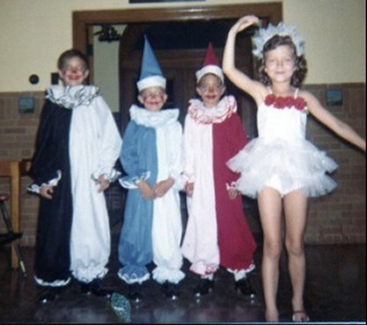
Jerry Walter, second from right, takes part in a tap dancing performance with his brothers and cousin. (Courtesy of Jerry Walter)
With my many school absences and poor grades, it was no surprise that college wasn’t an option. So, while the military may not be the best choice for someone with Fabry disease, I joined the U.S. Air Force in 1973. Surviving basic training and fulfilling my job requirements were huge physical challenges for me, but I was always able to meet the minimum requirements to move to the next opportunity.
I left the Air Force in 1980 and took a break to start college, then joined the Army in 1986. After making second lieutenant at the Fort Benning Officer Candidate School, I completed my bachelor’s degree. The Army was a major challenge, and I struggled to meet the physical requirements to stay until I retired in 2011.
I didn’t know I had Fabry when I enlisted in the military.
While I think the military is unlikely to admit people now who know they have Fabry, I believe early treatment is making it possible for young people to perform activities Fabry once made impossible.
The need for early treatment
There is strong evidence that early treatment can help prevent the early onset of symptoms and organ damage. Even so, some parents and healthcare providers are reluctant to start patients on enzyme replacement therapy too young. The thinking there is, “Let a child be a child before beginning lifelong treatment,” or “Don’t make a well child ill.”
I think that is the wrong approach. The reality is that children and adults with classic Fabry can’t live their most fulfilling lives without early treatment. Untreated Fabry disease is like living with restraints on all your abilities. I have met many people who started treatment at a young age and are thriving.
I have had a good life despite many adverse and life-threatening experiences that were the result of Fabry disease. I have endured, overcome obstacles, fought, been resilient, and never given up. Looking back at 71, I would have liked the opportunity to have lived my life without so many challenges if treatment had been available when I was young.
With continued research and advances in medicine, the future for children and adults with Fabry disease seems brighter.
Note: Fabry Disease News is strictly a news and information website about the disease. It does not provide medical advice, diagnosis, or treatment. This content is not intended to be a substitute for professional medical advice, diagnosis, or treatment. Always seek the advice of your physician or other qualified health provider with any questions you may have regarding a medical condition. Never disregard professional medical advice or delay in seeking it because of something you have read on this website. The opinions expressed in this column are not those of Fabry Disease News or its parent company, Bionews, and are intended to spark discussion about issues pertaining to Fabry disease.



Diane Rothman
I know you and know this story and you still amaze me! I believe encouraging reluctant parents to allow their children to get help early is one of the most important things you do,